
Screen Cleaning and Repair in San Clemente, CA
Dirty, dusty, or damaged window screens can make your windows look neglected and your views less clear. We clean screens and repair worn mesh, loose spline, and minor screen damage to help keep your San Clemente windows looking and working their best.
100+ ReviewS
Licensed & Certified
100% Satisfied clients
What It Costs and What We Do
Screen cleaning is part of every window job at no extra charge. On its own it starts at $75 for a standard set.
Most rescreening and frame repairs are finished on site the same visit, depending on frame condition and what we have on the vehicle. Rescreening an existing frame runs $25 to $40 a screen. A new screen with a new frame runs $45 to $75.
Sliding patio door screens are handled too, rescreened or rebuilt to fit. Everything happens at your house, and screens do not leave the property.
Why Screens Get Cleaned Before the Glass
This is the part most people never think about, and it is why cleaning the screens at the same appointment protects the result on the glass.
A dirty screen sits directly in front of the glass. Wash the window first, put the screen back, and the next breeze pushes dust off the mesh onto the pane you just paid to have cleaned. This is why screen cleaning is included with our residential window cleaning in San Clemente service.
So screens come out and get washed first. The glass is finished second, with nothing left in front of it waiting to blow back on.
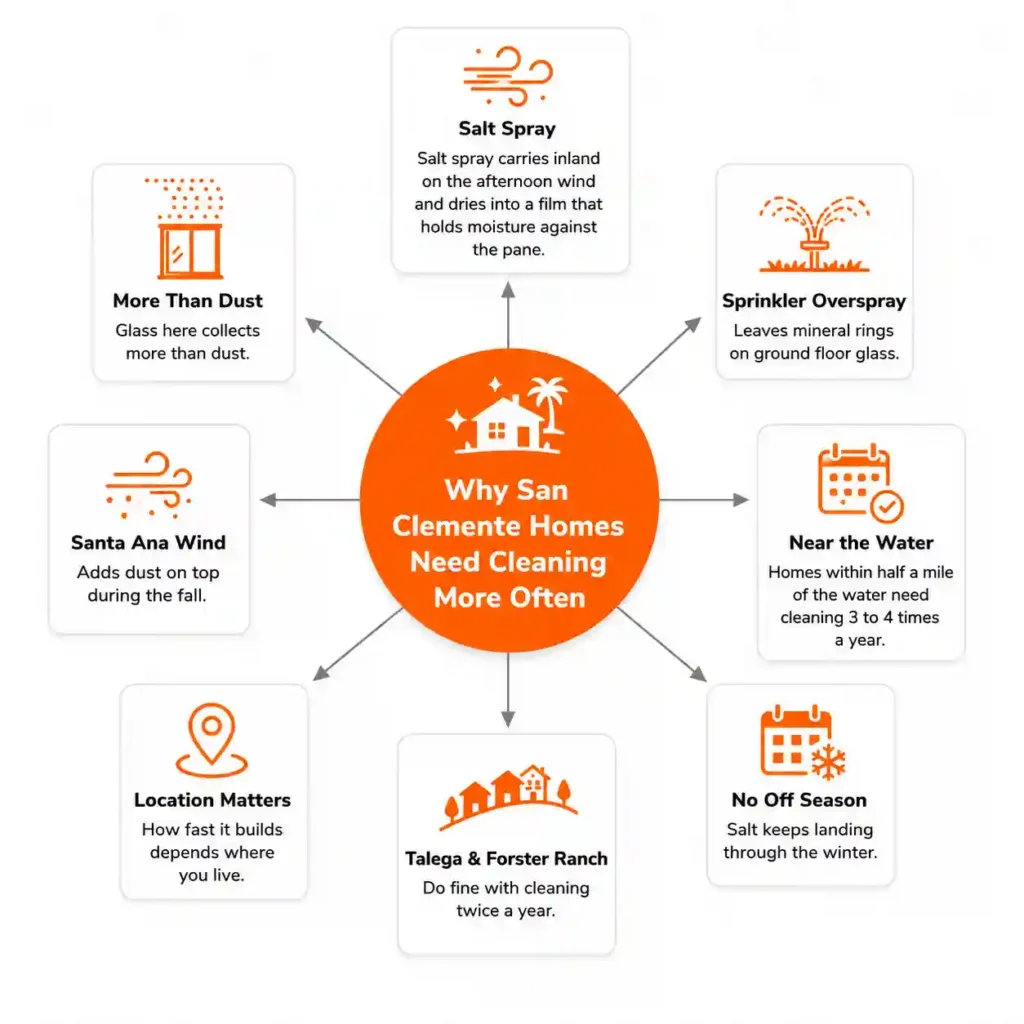
Screen Cleaning and Repair Prices in San Clemente
| Service | Price |
|---|---|
| Screen cleaning with a window clean | Included |
| Screen cleaning on its own | From $75 for a standard set |
| Rescreening an existing frame | $25 to $40 per screen |
| New screen with new frame | $45 to $75 per screen |
| Sliding door screen, rescreened | $65 to $95 |
| New sliding screen door, built to fit | $175 to $275 |
| Solar or pet resistant mesh | Add $10 to $20 per screen |
These are planning ranges. Final pricing depends on screen count, size, mesh type, and the condition of the frames.
The $75 minimum applies to a standalone screen visit. Individual repair prices apply once the work reaches that minimum, or when screens are added to a window clean.
What Changes the Price
Size matters more than count. One large picture window screen takes more mesh and more time than three small bathroom screens.
Mesh type changes it. Fiberglass is the baseline, and solar or pet resistant mesh costs more per square foot.
Frame condition changes it most. A frame with badly brittle corners may not survive rescreening, because seating the spline puts tension back into the frame. Those need rebuilding, and we tell you before starting.
Why Salt and Sun Are Harder on Screens Than on Glass
What Salt Does to Mesh, Spline, and Frame
Salt carried off the surf at T Street and Trestles settles into the weave, holding moisture against the screen. Mesh, spline, and frame all wear differently, and any can fail first. Spline hardens and shrinks until it lifts from the groove, while bare aluminum frames corrode faster in coastal air. Coated frames last longer but still wear sooner near the water. For heavier ocean exposure, our coastal window cleaning in San Clemente service also removes salt buildup from surrounding glass.
What UV Does to the Vinyl Coating
Fiberglass mesh is glass fiber under a vinyl coating. Sun breaks down the coating first, and once that goes the fibers underneath turn brittle and snap when handled.
West facing screens on the bluff get the worst of both, sun all afternoon and salt on the same wind. They reach the end of their life noticeably sooner than a sheltered screen on the same house.
Sprinkler Overspray and Frame Corrosion
Sprinklers hitting a ground floor screen are worse than rain. Local water carries dissolved calcium and magnesium, published each year by both water districts, and those minerals dry into the weave and work on the frame.
When lower screens look chalky and the upper ones do not, sprinkler overspray is worth checking as a cause.
How Long Screens Last in San Clemente
There is no fixed replacement age. What matters is exposure, and exposure varies street by street here.
| Exposure | What wears the screen first |
|---|---|
| Ocean facing or bluff top | Salt in the weave, sun, and wind |
| Coastal but sheltered | Salt and marine moisture |
| Inland, west facing | Sun and heat on the vinyl coating |
| Ground floor near sprinklers | Mineral buildup and frame corrosion |
Published estimates for standard fiberglass vary widely, and coastal exposure shortens whatever the starting figure is. The honest answer is that we look at the screen rather than the calendar. Brittleness, spline condition, frame corners, and mesh tension tell you more than an age ever will.
Aluminum mesh is more rigid and lasts longer on paper. Near the ocean that advantage narrows, because the metal can corrode and leave small spots that spread once they start.
When a Screen Is Too Far Gone to Clean
A screen past its useful life can look fine from ten feet away and tear the moment someone lifts it out of the frame.
Yellowed corners are the giveaway. When the plastic corner keys turn that color they have gone brittle, and the mesh is the same age and usually just as fragile.
So we check the corners and flex a bit of the mesh before pulling anything. If removal is likely to damage a screen, we explain the risk and the repair options before going any further, while it is still in the window.
Where a screen has reached that point and the frame is still serviceable, rescreening can usually be done in the same visit.
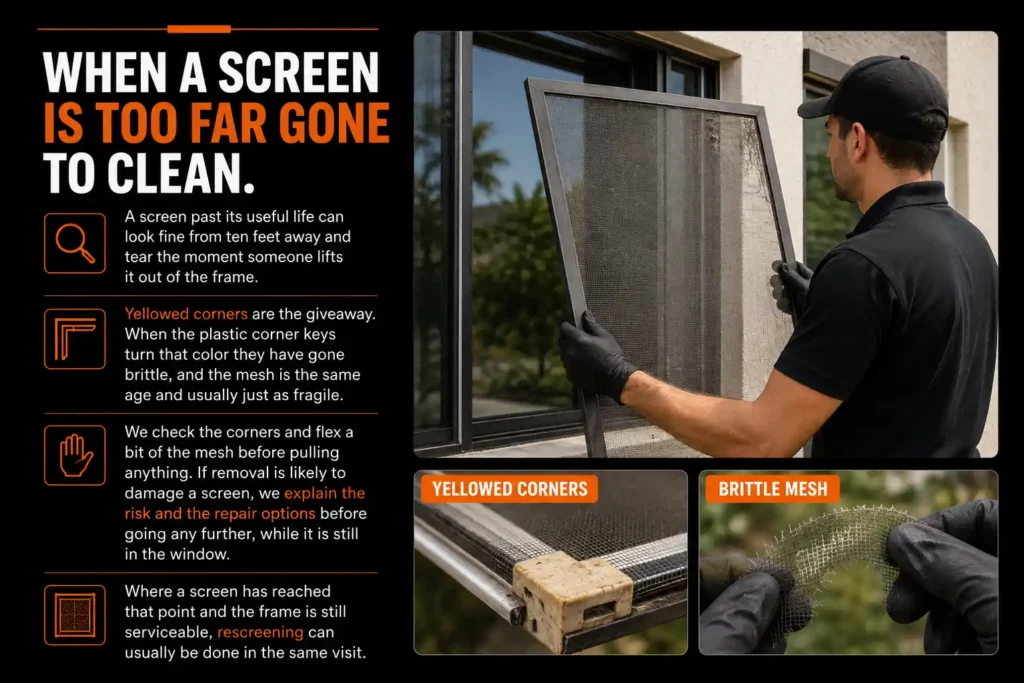
When a Screen Needs Replacing Rather Than Cleaning
Most screens just need washing. A few are past that, and it is worth knowing which is which before anyone touches them.
| What you see | What it means | Can it be cleaned? |
|---|---|---|
| Gray film, dust, pollen | Normal buildup | Yes |
| Mesh looks faded or chalky | Possible UV damage, mesh may be brittle | Risky. It may tear |
| Spline pulling out of the groove | Rubber has hardened and shrunk | Needs rescreening |
| Yellowed, crumbling corners | Plastic corner keys have gone brittle | Frame needs rebuilding |
| Bent or warped frame | Usually from being forced or dropped | Rebuild, not rescreen |
| Holes or tears | Any opening reduces insect protection | Rescreen |
| Small corrosion spots on metal mesh | Possible corrosion that may keep spreading | Rescreen |
Your First Clean Versus a Maintained Home
Included With Every Window Clean
Screens come out first, get marked so each returns to its own opening, and are washed on both sides. They dry fully before going back, because a damp screen traps moisture against the frame.
Marking matters more than people expect. Screens from one house are rarely interchangeable even when they look identical, and one forced into the wrong opening bends the frame.
Screen Cleaning On Its Own
Plenty of people keep up with their own glass and just want the screens done properly. That starts at $75, and it is worth booking before a repaint or before a house goes on the market.
Why Screens Need Low Pressure Cleaning
We own pressure washers and use them on driveways and patios. They do not go near a screen.
Too much pressure stretches mesh, bends light frames, and can push the spline out of its groove. The damage rarely shows as a tear, which is why a pressure washed screen can look fine and still be loose in the frame.
Screens get low pressure water, a soft brush, and mild soap. That covers most routine screen cleaning.
Heavily Neglected Screens
Screens left for years need a different approach. Dry vacuum first, then a plain water rinse, then solution left to sit so the grime softens instead of being scrubbed off dry.
After that, gentle work in small sections, repeated on the worst areas. Slower, but repeated gentle passes are safer on a neglected screen than scrubbing hard once.
Cleaning Screens Yourself, and Four Ways It Goes Wrong
Ground floor screens in good condition are a reasonable Saturday job. These are the four mistakes that turn it into a rescreening bill.
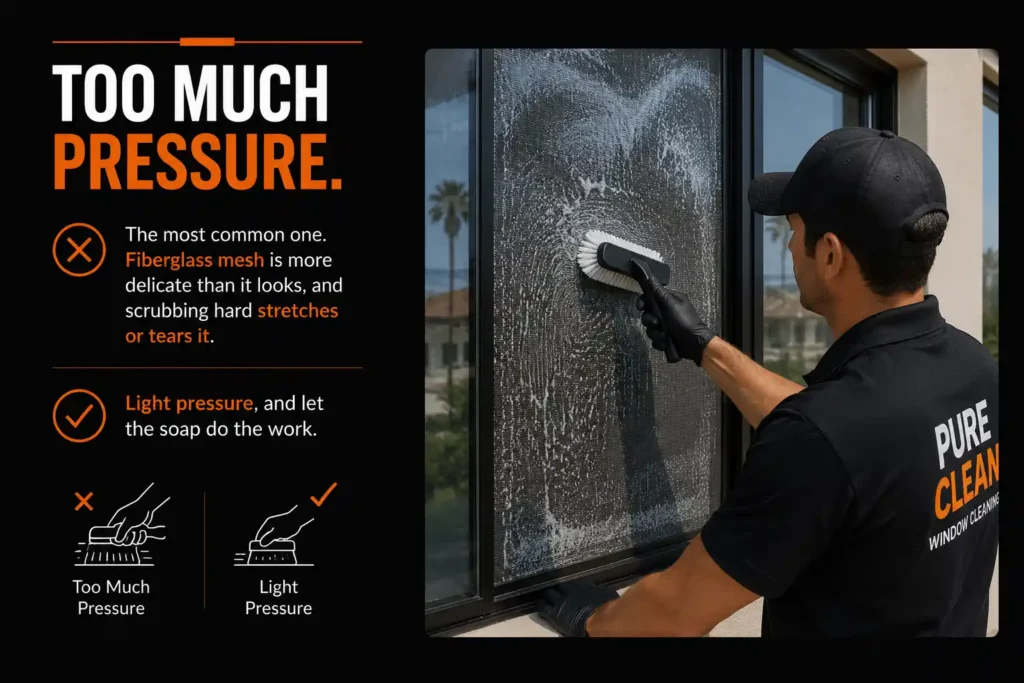
Too Much Pressure
The most common one. Fiberglass mesh is more delicate than it looks, and scrubbing hard stretches or tears it. Light pressure, and let the soap do the work.
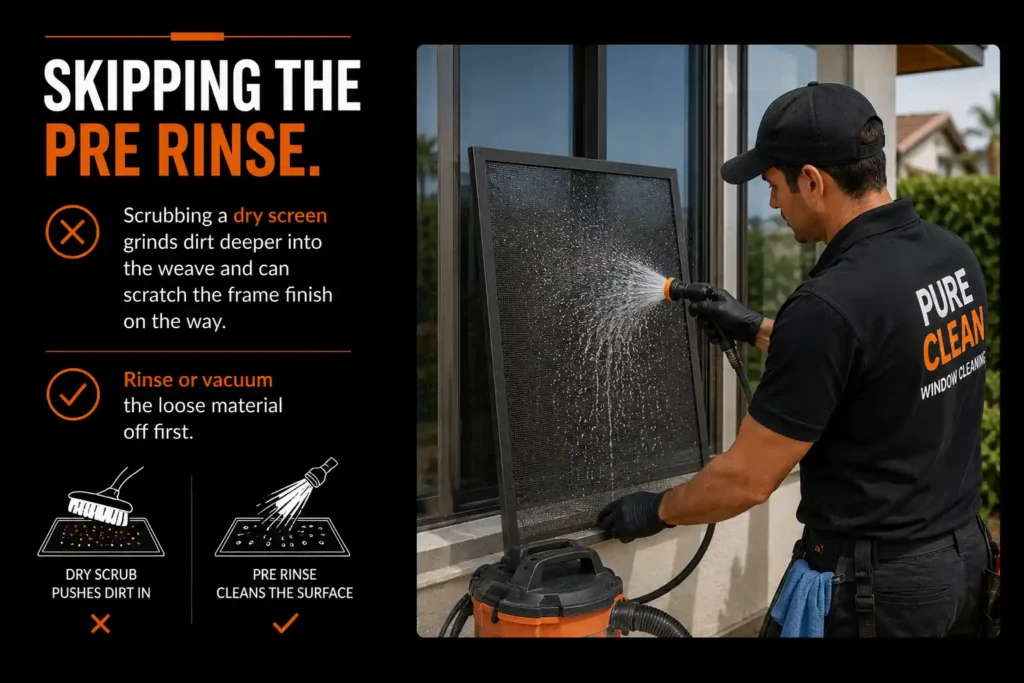
Skipping the Pre Rinse
Scrubbing a dry screen grinds dirt deeper into the weave and can scratch the frame finish on the way. Rinse or vacuum the loose material off first.
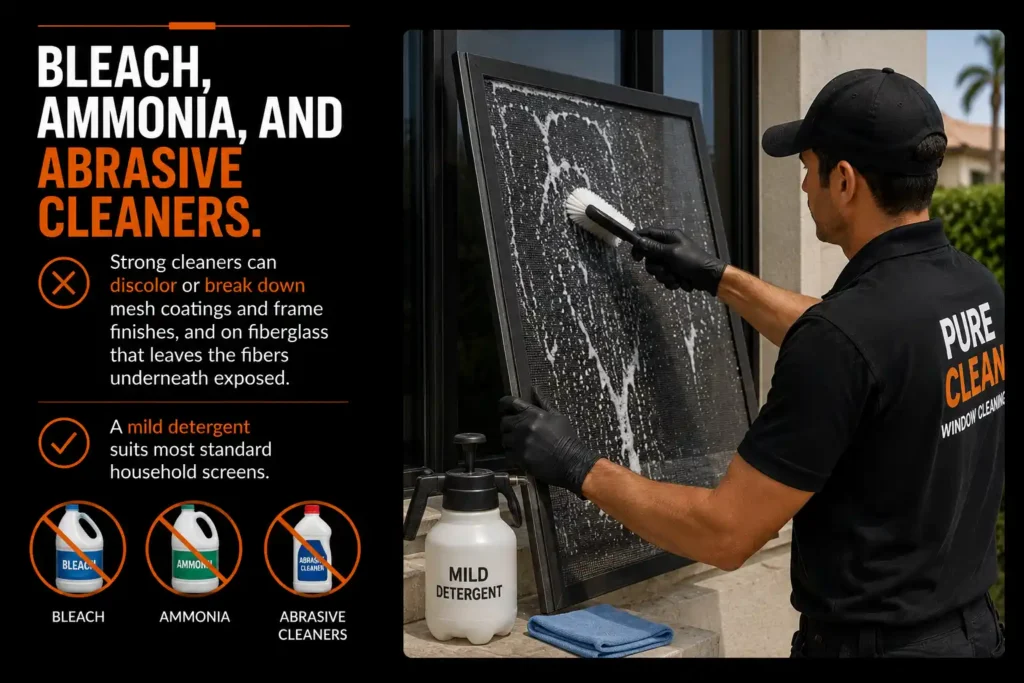
Bleach, Ammonia, and Abrasive Cleaners
Strong cleaners can discolor or break down mesh coatings and frame finishes, and on fiberglass that leaves the fibers underneath exposed. A mild detergent suits most standard household screens.
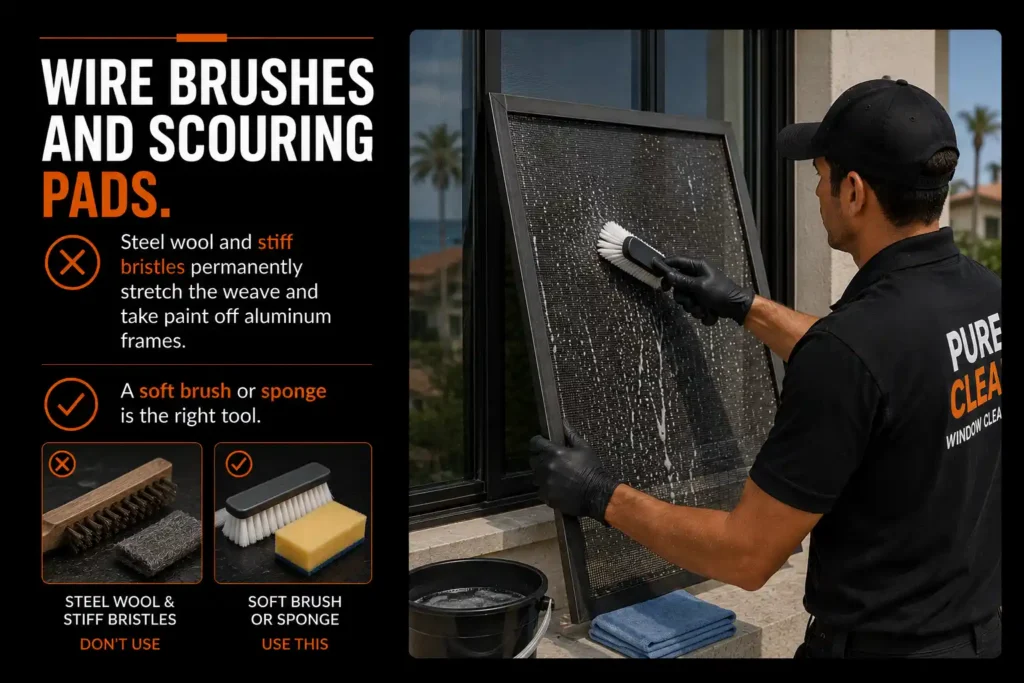
Wire Brushes and Scouring Pads
Steel wool and stiff bristles permanently stretch the weave and take paint off aluminum frames. A soft brush or sponge is the right tool.
Rescreening and New Frames On Site
Our vehicle carries mesh, spline, frame stock, and corner keys, so most work finishes in the same visit rather than becoming a drop off and collection.
Rescreening an Existing Frame
If the frame is sound, the old mesh and spline come out and new mesh goes in, rolled tight and trimmed. Quick work on a standard window screen.
This is the cheaper option and the right one whenever the frame will take it.
New Frames Built to Measure
Where a frame is bent, corroded, or brittle at the corners, we build a new one on site, measured to the opening rather than copied off the old frame. Old frames are usually out of square after years of being forced.
Which Mesh Suits a Coastal Home
| Mesh | Character | Best for | Watch for |
|---|---|---|---|
| Standard fiberglass | Flexible mesh that does not rust like metal | Most windows, clearest view | Coating breaks down in strong sun |
| Aluminum | Rigid, holds its shape | Sheltered or inland openings | Dents, and can corrode with coastal exposure |
| Solar mesh | Heavier, shades the glass | West and south facing rooms | Darker, cuts some of the view |
| Pet resistant | Heavier, more impact resistant weave | Doors and low windows with dogs | Heavier and costs more |
Standard fiberglass is a common coastal choice, because the mesh does not rust the way metal does and it gives a clearer view. The right option still depends on the opening, sun exposure, pets, and the frame it goes into.
Solar mesh is worth considering on west facing glass in Marblehead, Sea Summit, and along the bluff. It is a vinyl coated polyester weave made to cut solar heat and glare, which matters on rooms that bake all afternoon.
Making Your Screens Last Longer
Three habits help, and none of them costs anything.
Rinse them two or three times a year. A garden hose is enough. Regular rinsing cuts how much salt and dust stays in the weave, and it matters most on whichever elevation faces the water.
Move your sprinklers. Any head throwing water onto a screen puts hard water minerals into the mesh and onto the frame twice a day. Redirecting the arc costs nothing and cuts mineral buildup on the lower screens. The same overspray leaves hard water spots on the glass below.
Think about the mesh when you replace. If you are rescreening anyway, a heavier or shaded mesh may be worth the small extra cost where the opening actually calls for it.
How to Book Screen Cleaning or Repair
Step 1
Text or call (949) 522-8641 with a rough count and a picture of anything torn. You can also use our contact page to send photos and request a quote.
Step 2
You get a price before anything is booked. Ask about current availability, since screen work often fits alongside a window clean on a morning we are already nearby.
Step 3
We work at the property, check each frame before pulling it, and flag anything unlikely to survive a clean before touching it.

Before and After: Screens in San Clemente Homes
 Salt Etched Sliders in Talega
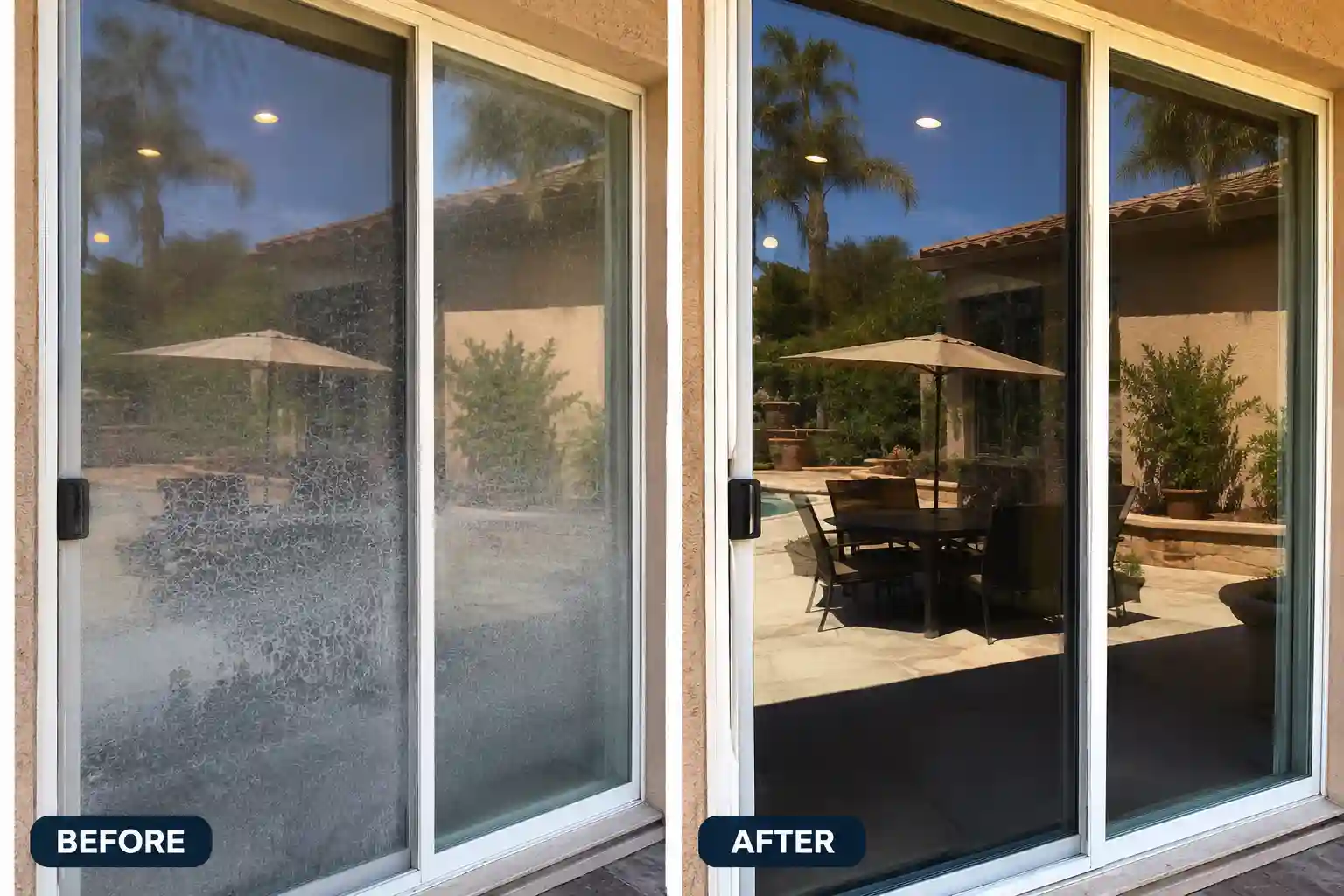
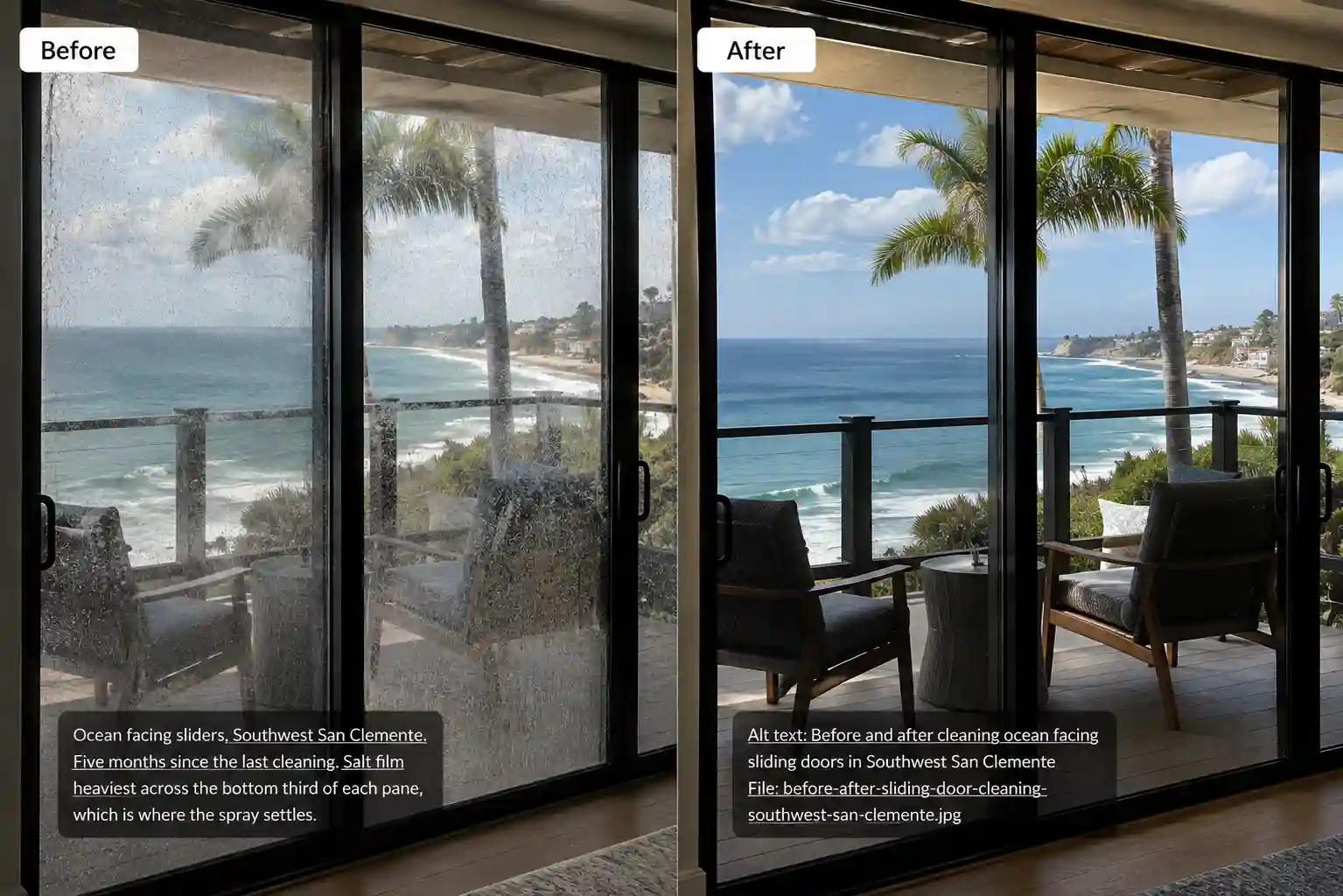
Your First Clean Versus a Maintained Home
Rescreening the Door Panel
Same process as a window screen, on a bigger frame. Doors take heavier mesh because of the traffic, and pet resistant mesh earns its cost on any door a dog uses.
When the Problem Is Not the Mesh
Sticking, jumping the track, and failing to latch usually come down to rollers, alignment, or track condition rather than the mesh.
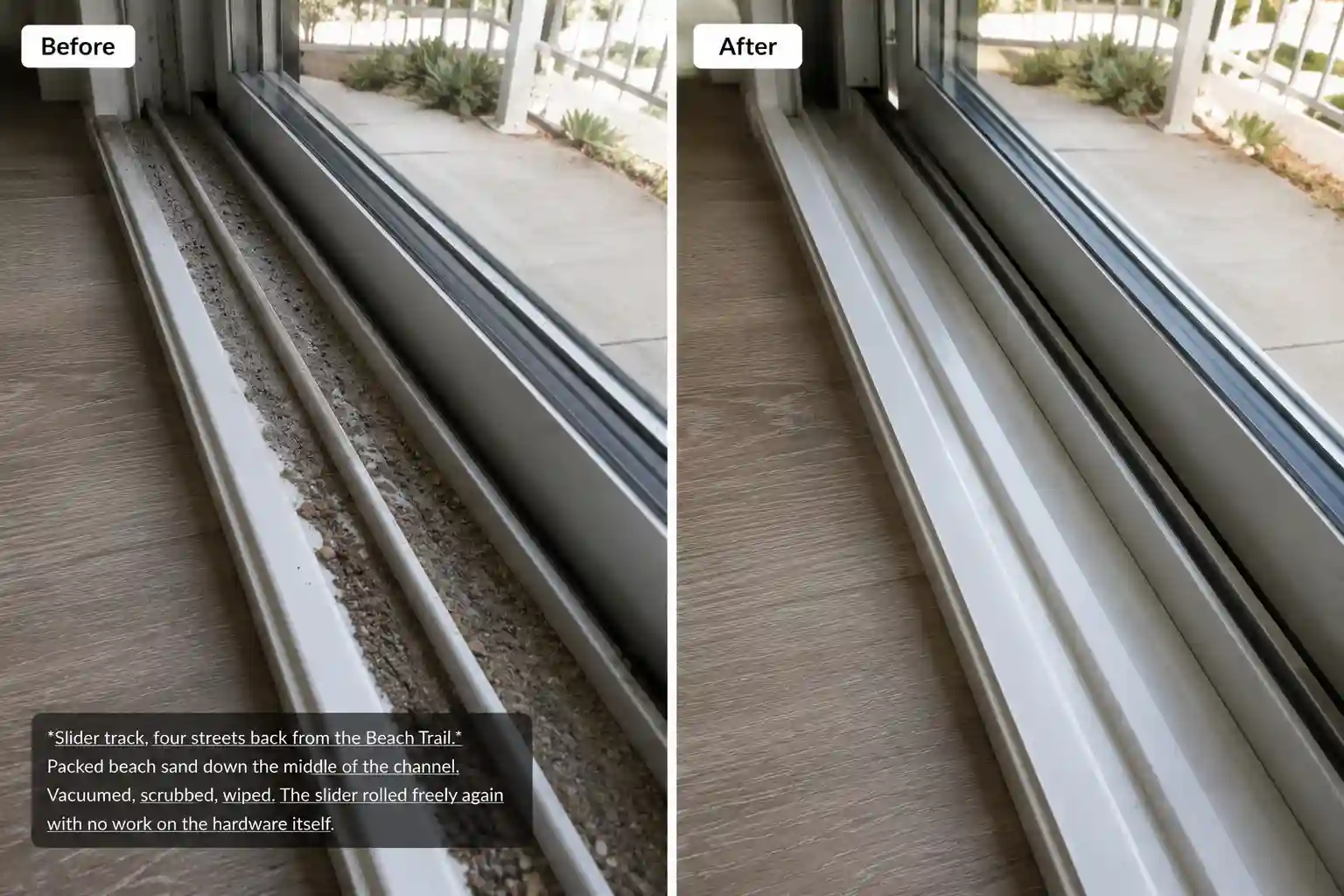
A packed track is often the whole problem, and clearing it is something we do. If the rollers have worn flat or the frame has dropped out of square, that is hardware work and outside what we take on. We will say so rather than rescreen a door that is still going to stick afterwards, and point you at someone who does that side of it.
What San Clemente Business Owners Say
We also provide commercial window cleaning in San Clemente for storefronts, offices, restaurants, and other local businesses.
Insured and Accountable
We carry general liability coverage of $1 million per occurrence and $2 million aggregate, plus workers compensation for everyone on the crew. Ask and we will email the certificate before the job.
Screen Cleaning and Repair Questions
We’re happy to help. If you can’t find the info you’re looking for, please don’t hesitate to reach out to us!
Call us (949) 522-8641
Areas We Serve for Screen Cleaning and Repair
We provide screen cleaning and repair throughout Southwest San Clemente, Pier Bowl, North Beach, the Riviera District, Marblehead, Sea Summit, Shorecliffs, Cyprus Shores, Cyprus Cove, Cotton’s Point, Broadmoor, Highland Light, Presidential Heights, the Coast District, Avenida Pico, Talega, Forster Ranch, Rancho San Clemente, and Vista Bahia. We also serve Dana Point, San Juan Capistrano, Capistrano Beach, Ladera Ranch, south Laguna Niguel, and both San Clemente ZIP codes. Coastal neighborhoods typically experience more salt and wind exposure, while inland areas see more sun and sprinkler-related wear.