
Hard Water Stain and Salt Film Removal for Windows in San Clemente, CA
Cloudy white haze, hard water spots, or salty film can make clean windows look dirty again within days. We identify what’s actually causing the buildup and recommend the right solution—from mineral and salt-film removal to professional polishing when glass has started to etch.
Get a Clear Assessment & Honest Quote →
100+ ReviewS
Licensed & Certified
100% Satisfied clients
Your Windows Have a Cloudy White Haze That Won’t Wipe Off. Here’s What’s Actually Going On.
You’ve tried a glass cleaner, maybe vinegar, maybe a scrub pad. The haze is still there, or it comes back within days. In San Clemente, common causes include mineral deposits from irrigation overspray, salt and marine residue from ocean air, and — on some windows — issues that have nothing to do with surface buildup at all. Sometimes more than one of these is happening at once.
The good news: most surface buildup is removable. The bad news: if it’s been sitting for a long time, some of it may have already etched into the glass itself, and no amount of cleaning brings that back. Here’s how to narrow down what you’re actually dealing with, and what actually works for each.
Is It Hard Water Spots, Salt Film, or Permanent Etching? A Screening Test — Not a Diagnosis
You don’t need a lab test to get a useful first read. Lightly run a clean fingernail across the haze.
A raised or gritty feel often points to surface deposits — mineral buildup or salt residue sitting on top of the glass. Completely smooth haze that remains after a proper cleaning can point toward etching or another glass condition underneath the surface. But texture alone isn’t a reliable diagnosis on its own: salt residue can feel smooth in places, mineral deposits can too, and light etching doesn’t always feel obviously different from a distance. Treat this as a quick first screening step, not a final answer — a real inspection is what actually confirms it.
One manufacturer explains the underlying issue well. CLR, which makes one of the most common hard water stain removers, states on their own product FAQ page that when their product doesn’t work, “the cloudiness is actually tiny cuts made in the glass by deposits in the water.” That’s the manufacturer of a cleaning product telling you plainly that their own product can’t fix physical damage — which is exactly why the distinction between surface buildup and actual damage matters before you spend money on repeat cleanings that won’t change anything.
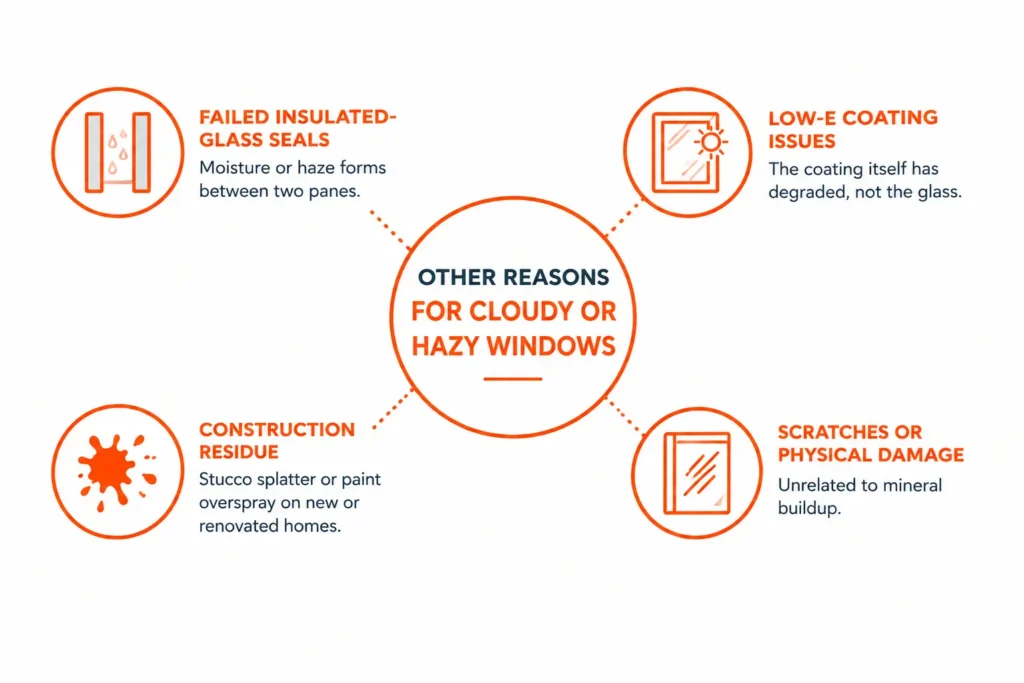
Other Causes of Cloudy Window Glass
Not every cloudy or hazy window is a hard-water or salt problem, and we’d rather tell you that upfront than treat every cloudy window the same way. Other real causes include:
- Failed insulated-glass seals, where moisture or haze forms between two panes (more on this below) Low-E or other exterior coating issues, where the coating itself has degraded rather than the glass being dirty Leftover construction residue, like stucco splatter or paint overspray, on newer or recently-renovated homes Scratches or physical surface damage unrelated to mineral buildup
We look at what’s actually in front of us before assuming it’s mineral or salt buildup, since the fix for each of these is completely different.
Why San Clemente Windows Get This So Fast
Two things stack on top of each other here that don’t affect most inland cities:
01
Mineral content in local water
Like most of Southern California, San Clemente’s water contains dissolved minerals that can leave residue behind when irrigation overspray or rainwater dries on glass. The City of San Clemente publishes its own water quality reporting if you want the specifics for your area.
02
Salt and marine residue from the coast
an-facing and hillside homes pick up airborne salt and marine residue that settles on glass and can reappear within days after a windy stretch. Several coastal-glass manufacturers recommend cleaning more frequently than the standard annual schedule specifically because of how fast this builds back up in salt-air zones.
That combination is why "I clean my windows and they look dirty again almost immediately" is a real, common complaint along this stretch of coast, especially on ocean-facing and hillside elevations. If your home is on a hillside or bluff, this is the same access-and-exposure combination we cover in more depth on our hard-to-reach window cleaning page.
What If the Haze Is Between the Glass Panes?
If you have double-pane (insulated glass) windows and the haze or moisture sits between the two panes rather than on either outside surface, that's a different problem entirely. It means the seal on that glass unit has failed, letting humidity in where no cleaning can reach it. You can usually tell because the haze won't wipe off from either side and often looks like fog or faint condensation rather than a dry, chalky residue. This is a glass-replacement issue, not a cleaning issue — we'll tell you honestly if that's what we're seeing rather than cleaning around it and charging you for something that won't help.
What Actually Removes Hard Water Spots and Salt Film
| Problem | What Actually Works |
| Salt & marine residue | Thoroughly rinse away salt and fine grit first, then clean with purified or deionized water. Mineral-free water helps prevent new residue as the glass dries. |
| Fresh mineral deposits | Use a mildly acidic solution, such as diluted white vinegar, and allow it a few minutes to loosen the minerals before rinsing. A non-abrasive pad can help remove loosened deposits. |
| Heavy mineral buildup | Professional-grade treatments may be needed. More aggressive scrubbing can cause damage, while controlled polishing with a cerium oxide compound may help with light etching. |
| Confirmed etching | Professional glass polishing may improve clarity and reduce the appearance of light etching, but severe pitting cannot be fully reversed. The remaining options may be living with some haze or replacing the glass. |
What Not to Use — a Real Warning
While researching this page, we came across an online forum where a homeowner asking about stubborn hard water stains was told, in sequence, to try acetone nail polish remover, then Goo Gone, then gasoline on their windows. Please don't do this. Unapproved solvents can damage frame finishes, films, coatings, seals, or surrounding materials depending on your specific window system, and gasoline near your home's glass and caulking is a real safety hazard, not a cleaning hack. If your windows have Low-E or another exterior coating, check your window manufacturer's cleaning guidance before using any acid-based or abrasive product at all, since some coatings can be damaged by treatments that are perfectly safe on plain glass. If vinegar and gentle mechanical cleaning haven't worked, the safer next step is a professional assessment, not a stronger solvent.
Should I Clean, Polish, or Replace the Glass?
| What you're seeing | Usual best option |
| Salt or marine film that wipes clean | Regular cleaning |
| Fresh mineral deposits, not yet etched | Mineral-removal treatment |
| Heavy mineral buildup, not yet etched | Professional-grade treatment |
| Light etching | Glass polishing may help |
| Severe etching | Evaluate glass replacement |
| Haze or fog between two panes | Glass-unit inspection and likely replacement |
Preventing It From Coming Back
- Redirect sprinklers and irrigation heads away from windows where possible — this is the single biggest fix for mineral buildup on ground-floor and garden-facing glass.
- Clean more often than the standard annual schedule if you're ocean-facing or on a hillside. Many coastal homeowners find a three-to-four-month cleaning cycle more practical than waiting a full year, though the right interval really depends on your distance from the water, wind exposure, and orientation.
- Rinse after major wind events if you're on a bluff-top or oceanfront property, since that's often when salt and marine residue builds up fastest.
- Don't let visible spotting sit for "next year." Fresh deposits are usually easier and cheaper to deal with than the same deposits after a long stretch of sun exposure.
How Much Does This Cost?
There's no single number we can give you here, because the right answer depends on what's actually on your glass. Light salt residue and fresh mineral deposits are a straightforward part of a regular cleaning. Etched or heavily built-up glass needs a real inspection to know whether polishing makes sense or whether you're better off saving that money toward eventual glass replacement. We look at your specific windows and give you a clear, honest price and recommendation before any work starts — including telling you plainly if a treatment isn't worth the cost for a given window.
Should I Try This Myself?
For light, fresh salt residue or recent mineral spotting on plain, uncoated glass, a vinegar-and-water solution and a soft non-abrasive pad is a reasonable DIY approach, followed by a rinse with purified or deionized water if you have it, so you're not just adding new mineral residue back on top. Check your window manufacturer's care instructions first if your glass has a Low-E or other coating. For anything that's been there a long time, doesn't respond to that approach, or that you suspect might already be etched, more aggressive scrubbing usually makes things worse, not better — and it's the point where a professional assessment makes more sense than trial and error with stronger chemicals.
How Booking Works
- Tell us what you're seeing — texture, whether it's on the surface or seems to be between the panes, how long it's been there, and roughly which windows are affected.
- We inspect before we quote. Surface buildup, salt residue, true etching, and failed seals all get handled differently, and we'll tell you honestly which one you have.
- Get a clear price and recommendation, including an honest answer if a treatment isn't likely to be worth the cost.
- We clean, treat, or polish as appropriate — and tell you directly if what's left is permanent or a repair issue, so you're not paying for repeat visits that won't change it.

What a Typical Hard Water / Salt Film Job Looks Like
Case #1
A ground-floor home with sprinklers hitting the front windows daily: the haze feels slightly raised, consistent with fresh mineral deposits. A vinegar-based treatment and thorough rinse clears it in one visit, and redirecting the sprinkler heads helps keep it from building back up as fast.
Case #2
An oceanfront home that hasn't had its windows professionally cleaned in over two years: several panes show haze that doesn't respond to standard cleaning. After inspection, some windows clean up fully with a deeper mineral- and salt-removal process; a few show light etching that polishing improves but doesn't fully erase. The honest recommendation on those few panes is to monitor them rather than pay for repeat polishing with diminishing returns.
Related Services
Insured and Accountable
We carry general liability insurance at $1 million per occurrence and $2 million aggregate, along with workers' compensation coverage for our crew. If anything goes wrong on your property during a hard water or salt film treatment, you're not the one holding the risk.
About Our Team
Our team works on residential glass throughout San Clemente, including the mineral buildup, salt and marine residue, and hard-to-reach access issues that come with this stretch of coastline. We'll tell you honestly what we're seeing on your specific windows rather than treating every cloudy window the same way.
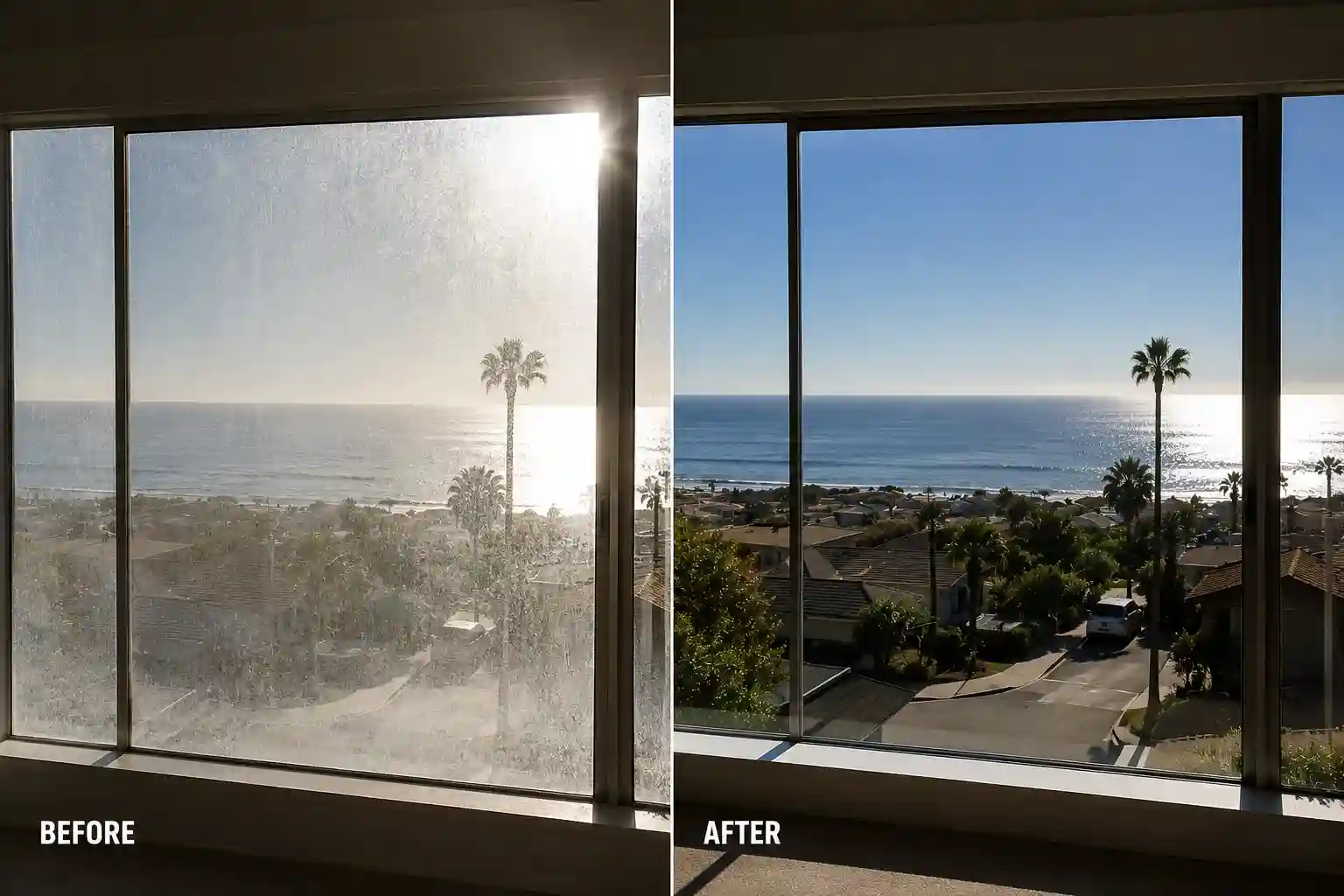
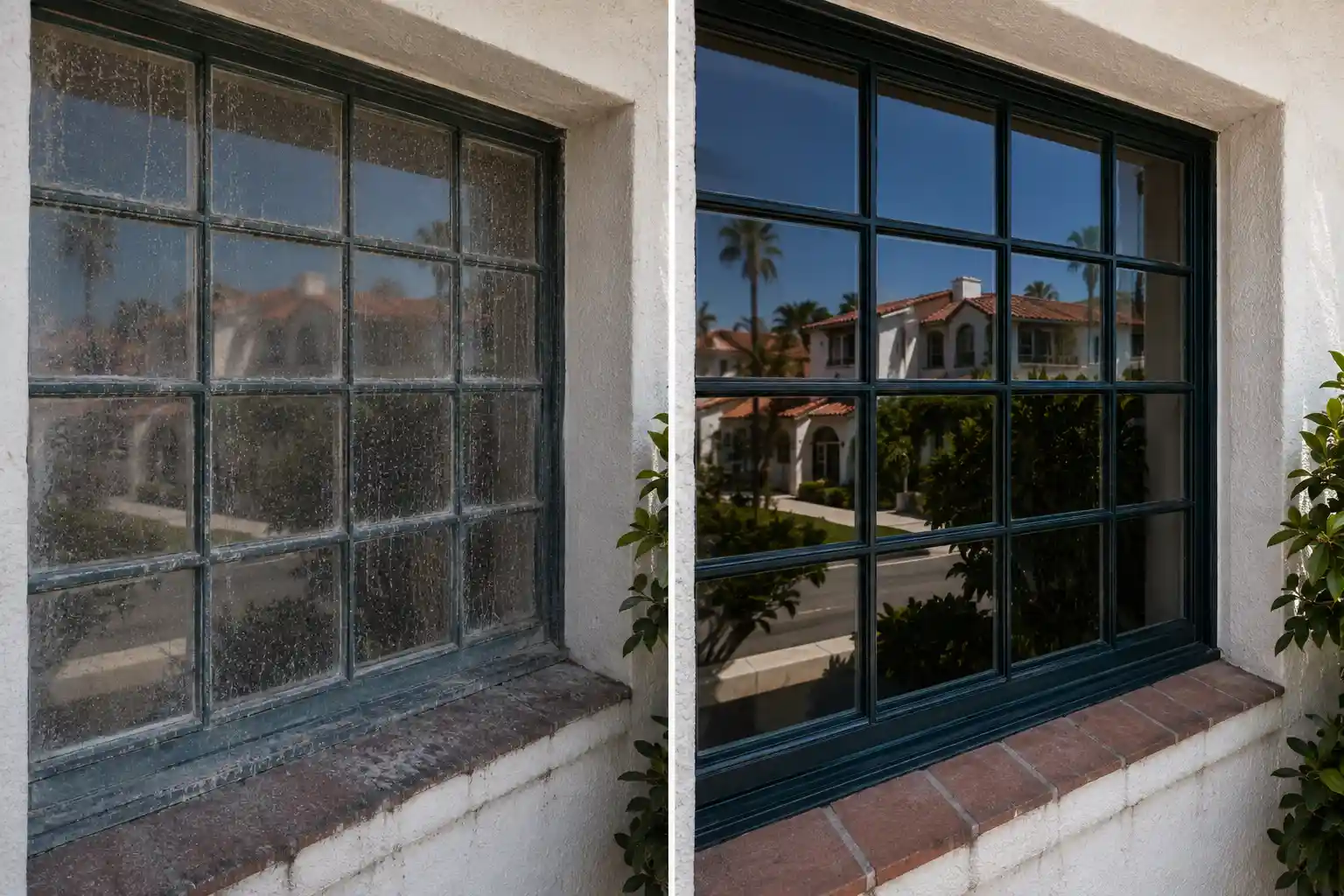
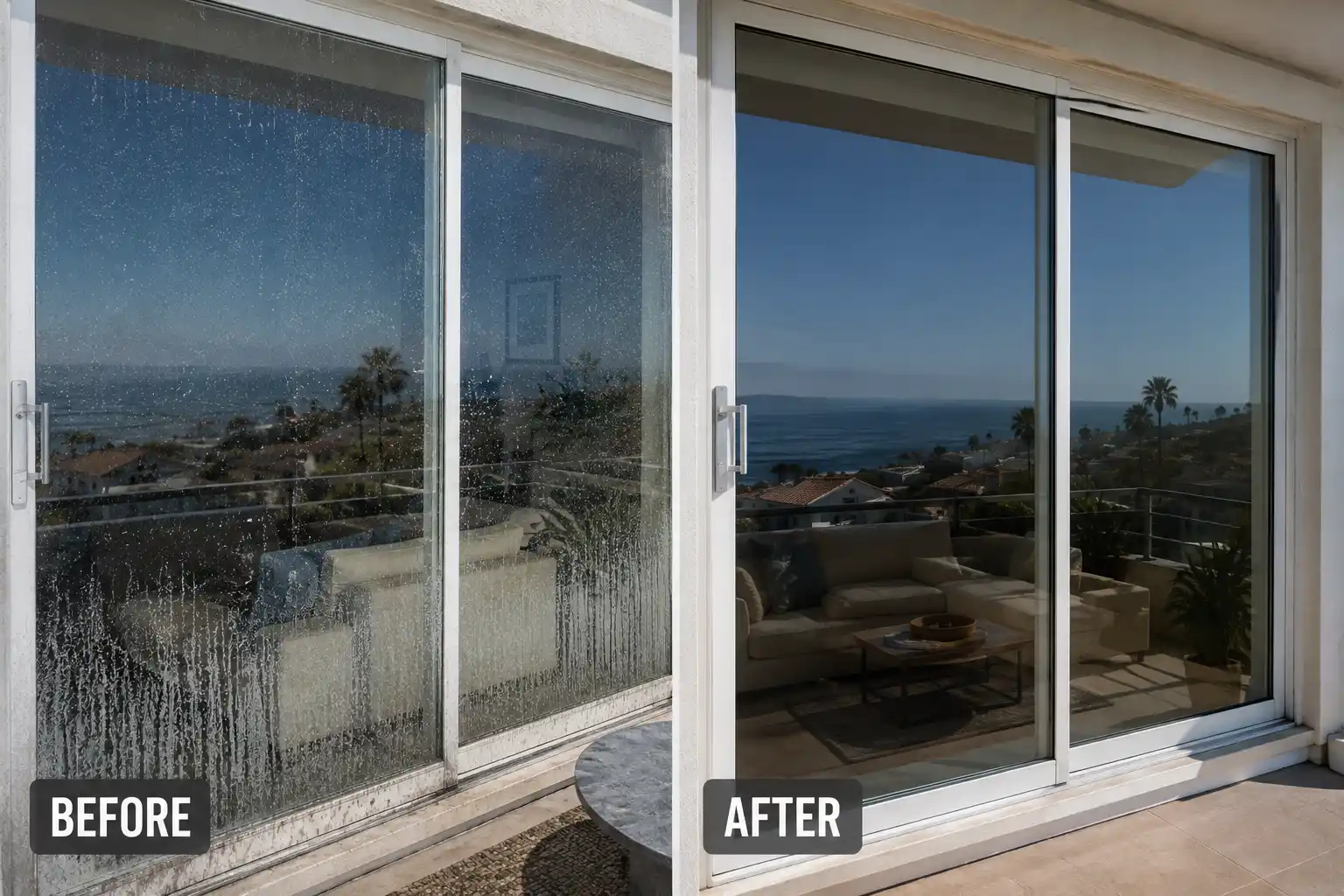
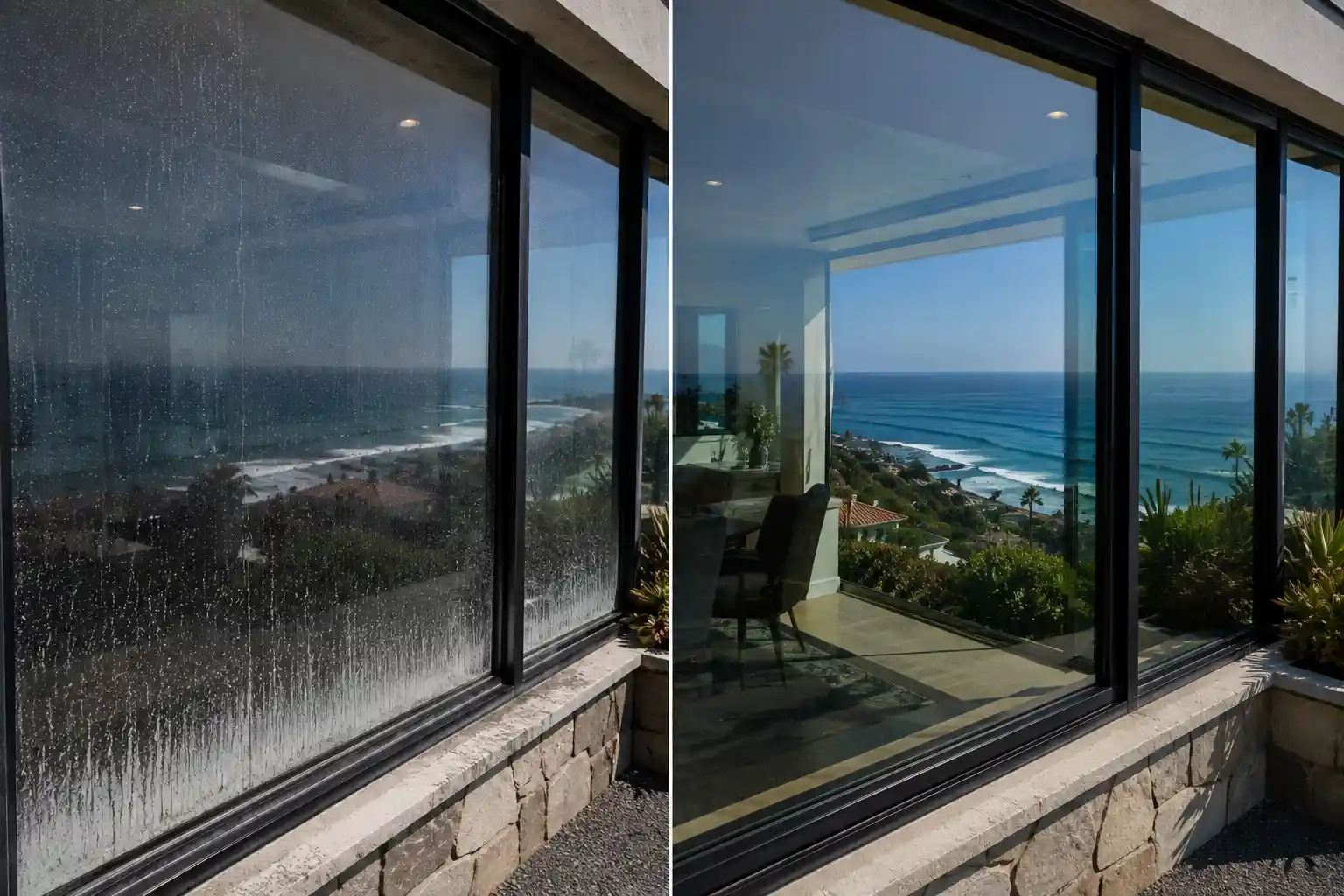
Before and After: Window Cleaning in San Clemente
 Ocean Facing Glass in Southwest
- Recessed sash, Riviera District
- West facing sliders, Southwest San Clemente
- Ocean facing wall, Sea Summit.
What San Clemente Business Owners Say
Hard Water and Salt Film FAQs
We’re happy to help. If you can’t find the info you’re looking for, please don’t hesitate to reach out to us!
Call us (949) 522-8641
Areas We Serve
We serve homes throughout San Clemente, including oceanfront and hillside properties in and around Talega, Forster Ranch, Rancho San Clemente, Marblehead, Sea Summit, Shorecliffs, and the Pier Bowl, plus gated communities including Cyprus Cove, Cyprus Shores, and Sea Pointe Estates — as well as nearby Dana Point and San Juan Capistrano. This includes ZIP codes 92672 and 92673, and nearby areas.